
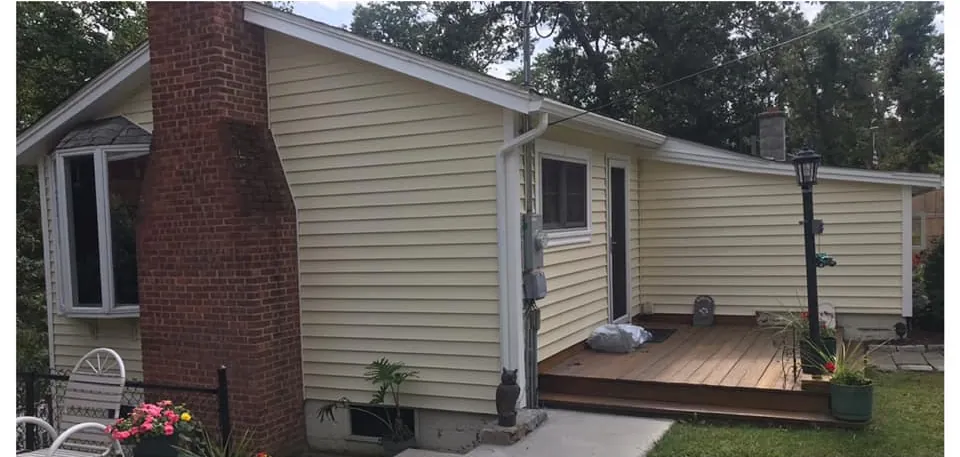
Drive through Southbury, Woodbury or Oxford and you will still see plenty of homes wearing aluminum siding from the 1960s and 1970s, right next to homes in fresh vinyl. If your house has aluminum siding, or you are trying to decide what to put on next, here is how the two materials actually compare.
A Quick History
Aluminum siding took off after World War II and was the low-maintenance siding of its day, sold as the end of scraping and repainting wood clapboards. Vinyl siding arrived in the following decades, improved steadily, and gradually took over. Today vinyl is by far the most common siding on new and re-sided homes in Connecticut, and new aluminum siding is rarely installed on houses.
Aluminum vs. Vinyl, Side by Side
- Dents: aluminum dents. A baseball, a ladder, a hailstorm or a snowblower can leave a mark that stays. Vinyl flexes and springs back from most everyday knocks.
- Color and fading: aluminum siding has a painted or baked-on finish that fades and chalks over time. Rub your hand on old aluminum siding and it often comes away white. Vinyl's color runs all the way through the material, so a scratch does not show bare metal.
- Painting: aluminum can be repainted, which is one way to refresh it, but then you are back to repainting every so often. Quality vinyl never needs paint.
- Moisture: neither material rots. Both depend on proper flashing and housewrap underneath to keep water out of the walls.
- Cold weather: very cold vinyl is more brittle and can crack from a hard impact in deep winter. Aluminum does not crack, but it dents instead.
- Noise: aluminum can tick as it heats and cools, and rain and hail are louder against it.
- Fire: aluminum will not burn. Vinyl will melt or warp near intense heat, such as a grill set too close to the wall.
- Looks: modern vinyl comes in far more profiles and colors than aluminum ever did, including shake, board-and-batten and lap styles in a wide range of colors.
Matching or Repairing Old Aluminum Siding
The hardest part of owning aluminum siding today is repair. When a section gets damaged, finding a matching profile and color is difficult because so little is still made, and decades of fading mean even a perfect match from the factory would not match the wall. Homeowners often end up repainting a whole side to blend a repair in.
That is usually the moment people start asking whether it is time to re-side.
When It Makes Sense to Replace Aluminum With Vinyl
- The siding is heavily dented, faded or chalking, and repainting would be an ongoing job.
- Pieces are loose, missing or damaged and cannot be matched.
- You are already replacing the roof, windows or gutters and want the outside of the house finished at once.
- You are getting ready to sell and want the house to look its best.
Replacing the siding is also the chance to see what is underneath. Old siding can hide damaged sheathing, missing flashing around windows, or no housewrap at all. Fixing those while the walls are open is far easier than finding them later.
Our Take
If your aluminum siding is sound, flat and holding its color, there is no rush to replace it. If it is dented, chalking or failing, quality vinyl is the practical upgrade for a Connecticut home. It handles the moisture and temperature swings of a New England year, never needs painting, and comes in far more styles than aluminum ever did. Read more on our vinyl siding page, or browse finished jobs on the before and after page.
Martin's Aluminum Products has been working on homes in Southbury, Woodbury, Oxford and across Western Connecticut since 1961. Call us at (203) 264-9912 for a free siding estimate.
← Back to all posts